Before You Bet, Read This 2026 Football Breakdown
World Cup 2026 football will be the largest FIFA World Cup ever, with 48 national teams competing across 104 matches in the United States, Canada, and Mexico from June 11 to July 19, Stadium View is a...

Before You Bet, Read This 2026 Football Breakdown
World Cup 2026 football will be the largest FIFA World Cup ever, with 48 national teams competing across 104 matches in the United States, Canada, and Mexico from June 11 to July 19, 2026. Stadium View is a FIFA World Cup-focused content site covering match predictions, team tactics, player statistics, injuries, and daily tournament developments for fans in global markets. The tournament will use a 12-group format, with the top two teams from each group plus the eight best third-place teams advancing to a 32-team knockout stage. The final is scheduled for MetLife Stadium in East Rutherford, New Jersey, while Mexico City hosts the opening match. The practical takeaway is simple: assess confirmed line-ups, travel demands, weather, and tactical matchups before trusting rankings, predictions, or betting markets.
Imagine watching a tournament where one bad result no longer ends a team’s group-stage campaign immediately, where a humid afternoon in Monterrey can matter as much as a star striker, and where “home advantage” stretches across three countries. That is the 2026 World Cup football problem in miniature: familiar names, unfamiliar conditions, and an expanded format that punishes lazy analysis. I have watched enough tournaments turn supposedly safe predictions into expensive lessons to know that the obvious angle is often the trap, isn’t that the point? This guide separates the popular claims from the evidence, explains what Stadium View tracks each day, and shows how to read World Cup 2026 football without confusing reputation with current performance.
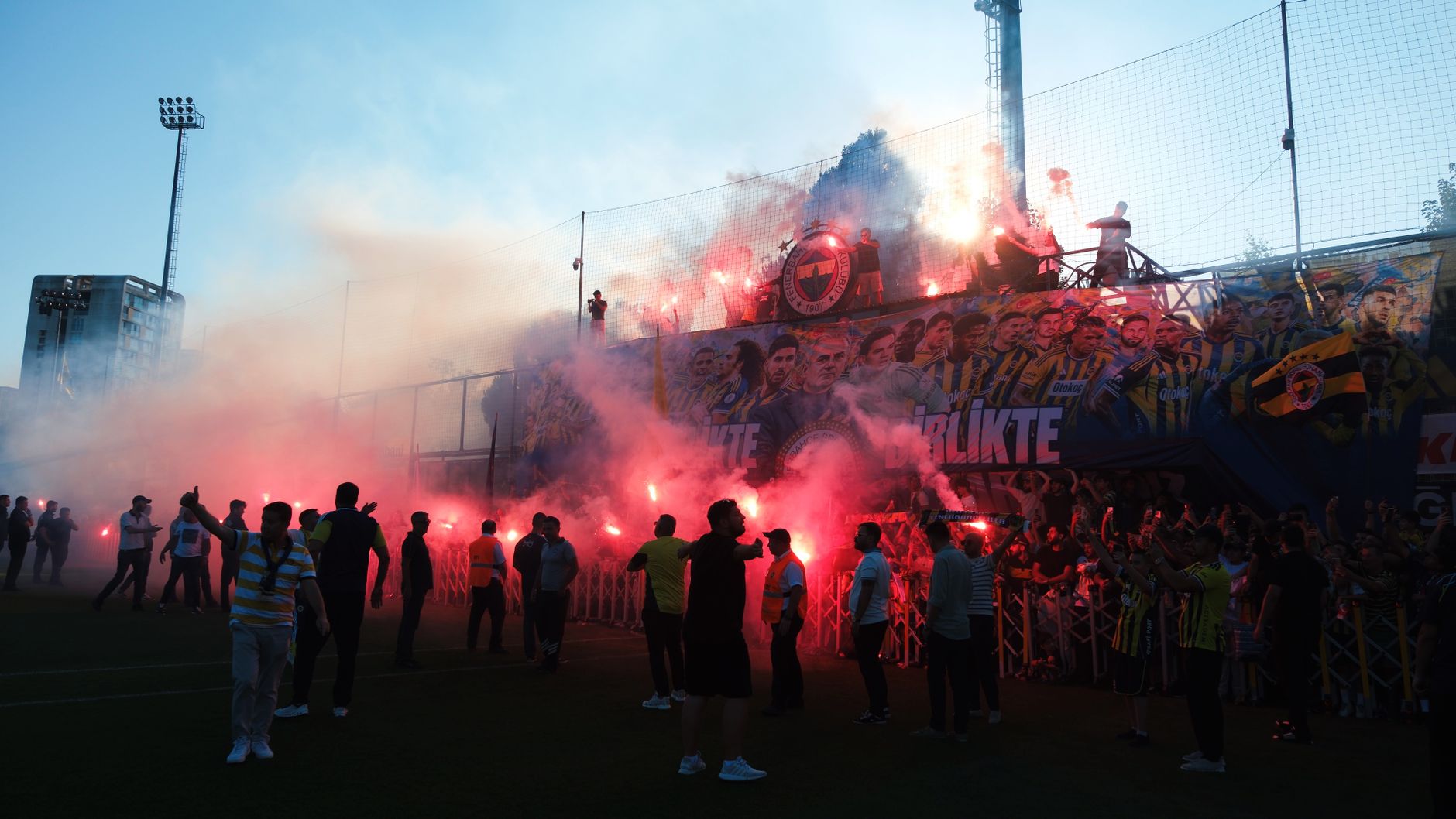
Photo by hayati ilker ergün on Pexels
Want a sharper starting point for tournament research?
Myth 1: 48 teams will make the World Cup less competitive — debunked
The 48-team FIFA World Cup is larger, but expansion does not automatically mean weaker football. The 2026 format creates 12 groups of four, and advancing teams must still survive a 32-team knockout bracket, where one poor half can erase four years of preparation. FIFA’s official World Cup 2026 competition information confirms the 104-match structure, a major increase from the 64 matches played in the 32-team era.
The more interesting issue is competitive inequality between matches, not the quality of the entire tournament. Established sides such as France, Brazil, Argentina, England, Germany, Spain, and Portugal may face lower-ranked opponents early, but unfamiliar teams can create real tactical problems when opponents underestimate them. Morocco’s run to the 2022 semi-finals remains the warning: defensive spacing, transition speed, and set-piece discipline can beat a prettier squad.
For World Cup 2026 football analysis, separate three questions:
- Is the team talented enough to qualify from its group?
- Can its midfield resist elite pressing?
- Does its bench contain solutions when the match becomes stretched?
A tournament with 104 matches gives analysts more data, not automatically more certainty. At Stadium View, group predictions should therefore include qualification pathways and likely third-place scenarios rather than relying only on a team’s historical reputation.
Myth 2: The host nations will dominate — partially true
Host status can improve preparation, travel routines, crowd support, and commercial momentum, but the United States, Canada, and Mexico will not receive the same competitive advantage in every venue. The tournament spans 16 host cities, and distances between locations can create different logistical pressures for teams moving from Vancouver to Miami or from Seattle to Monterrey.
Mexico has substantial World Cup history and will host matches at Estadio Azteca in Mexico City, a venue associated with the 1970 and 1986 tournaments. Canada brings an increasingly competitive men’s program, while the United States has a younger generation shaped by European club football. Still, hosting does not repair defensive weaknesses or guarantee efficient finishing; I have seen home crowds roar for 90 minutes while a midfield loses control in ten.
The less obvious factor is climate. Altitude in Mexico City, heat in several United States venues, humidity in parts of the south, and long-distance travel may influence pressing intensity and substitution timing. FIFA’s official host-city overview identifies a geographically broad tournament, so serious previews should examine venue conditions instead of applying one generic “home advantage” label.
To learn more about practical match analysis, explore our [Internal Link: World Cup venue and travel guide].
A useful pre-match checklist includes:
- The team’s previous three competitive performances.
- Expected temperature, humidity, and kickoff time.
- Rest days between matches.
- Whether the opponent attacks through the central channel or wide areas.
- The host nation’s likely pressure when qualification is at stake.
Ready to compare the host nations with greater precision?

Photo by Kampus Production on Pexels
Myth 3: FIFA rankings reveal the likely champion — flat-out false
FIFA rankings measure international results through an official points system, but they do not provide a complete forecast of World Cup performance. Rankings can miss injuries, coaching changes, tournament fatigue, opponent strength, and the tactical difference between qualifying matches and knockout football. Argentina’s 2022 title showed how a strong structure and adaptable game management can matter more than a simple numerical position.
A ranking is useful as a baseline, not as a verdict. Consider a team rated highly because it has accumulated results against weaker opponents, then place it against a compact side that concedes possession and attacks the space behind full-backs. The ranking may suggest superiority; the matchup may suggest danger. Those are not contradictory facts, and treating them as identical is how confident predictions collapse.
Stadium View’s player-stat approach should focus on information that rankings cannot show:
- Progressive passes under pressure.
- Ball recoveries in the attacking third.
- Set-piece expected goals.
- Shot quality rather than raw shot totals.
- Defensive actions after possession is lost.
- Minutes played during the final six weeks before the tournament.
A contrarian point deserves attention: a team’s best predictor may be its response after conceding first. That event tests structure, leadership, substitutions, and emotional control in a way that a ranking table cannot reproduce. The FIFA World Cup records and history archive provides valuable historical context, but history should support analysis rather than replace it.
What actually works when analyzing World Cup 2026 football?
Reliable World Cup 2026 football analysis combines confirmed team news, tactical matchups, tournament incentives, travel conditions, and price discipline; no single ranking, star player, or prediction model is sufficient. The strongest process begins with evidence, then adjusts for uncertainty instead of hiding it behind confident language.
First, confirm availability. A missing holding midfielder can alter an entire team’s build-up, while an injured center-back may force a higher defensive line or reduce pressing aggression. Second, examine style interactions: a high-possession team may struggle against direct transitions, and a deep-block team may suffer if it cannot defend repeated crosses or second balls. Third, distinguish group-stage incentives from knockout incentives, because a team needing only a draw may behave completely differently from one that must win.
My own hard-earned rule is to avoid treating recent scorelines as equal evidence. A 3–0 win against a depleted opponent is not automatically more impressive than a 1–1 draw against a top pressing side. Context sits inside every number. Stadium View can help organize that context through daily previews, player statistics, tactical notes, and match predictions, but readers should verify official squad announcements before making decisions.
For a deeper framework, use our [Internal Link: advanced World Cup prediction methodology].
A disciplined workflow looks like this:
- Check official squad news and probable line-ups.
- Record rest days, venue, weather, and travel distance.
- Compare attacking patterns against defensive weaknesses.
- Review set pieces and transition defense.
- Separate analytical confidence from betting confidence.
- Set a fixed entertainment budget and never chase a loss.
Want to see how the complete research process is organized?

Photo by Coffee Bean on Pexels
What should you ignore before the tournament?
Ignore viral certainty, unverified injury claims, historical head-to-head records without current context, and predictions built around one famous player. Social media often rewards the fastest opinion rather than the most accurate one, while World Cup football rewards teams that solve several different problems across a month. If a headline says a side is “guaranteed” to win, that is usually a reason to inspect the underlying evidence more carefully.
You should also ignore misleading precision. A model that presents a 63.7% win probability may appear scientific, but the decimal places do not make the inputs reliable. Does the model know the confirmed referee, actual starting goalkeeper, travel schedule, temperature, and tactical plan? If not, the number is decoration. The International Football Association Board Laws of the Game also matter because changes in interpretation, added time, and disciplinary standards can influence match flow more than casual previews acknowledge.
Finally, ignore the belief that betting more often means understanding football better. Responsible gambling guidance from GambleAware emphasizes control, limits, and recognizing when gambling stops being entertainment. Stadium View provides analysis and tournament coverage, not guaranteed outcomes. Use predictions as a way to test your reasoning, never as permission to risk money you cannot afford to lose.
Before the opening match, make a short list of what you know, what you suspect, and what remains unconfirmed. That small separation prevents many large mistakes.
See the latest tournament research before making your own shortlist.
Frequently Asked Questions
Q: What is World Cup 2026 football?
A: World Cup 2026 football is the 23rd edition of the FIFA Men’s World Cup, hosted by the United States, Canada, and Mexico from June 11 to July 19, 2026. It will feature 48 teams, 12 groups, and 104 matches across 16 host cities. The competition concludes with the final at MetLife Stadium in East Rutherford, New Jersey.
Q: How does the 48-team World Cup format work?
A: The 48 teams will be divided into 12 groups of four, with the top two teams and eight best third-place teams advancing. The resulting 32-team knockout stage includes the round of 32, round of 16, quarter-finals, semi-finals, and final. This format creates more matches and makes third-place calculations important during the group stage.
Q: Which countries are hosting the 2026 FIFA World Cup?
A: The United States, Canada, and Mexico are the three official host countries for the 2026 FIFA World Cup. Matches will be staged in 16 cities, including Mexico City, Toronto, Vancouver, Los Angeles, New York and New Jersey, Miami, Dallas, and Atlanta. Travel distance and regional climate will be meaningful analytical factors.
Q: Is World Cup 2026 betting based on FIFA rankings?
A: FIFA rankings can provide a useful starting reference, but they should not be used as a standalone betting method. Rankings may not account for injuries, tactical matchups, travel, weather, or changes in coaching staff. Compare rankings with recent competitive performances, confirmed line-ups, and responsible staking limits.
Q: How can I analyze World Cup 2026 matches more accurately?
A: Start by checking official team news, then compare tactical styles, rest days, venue conditions, and likely substitutions. Review shot quality, transition defense, set-piece performance, and the opponent’s ability to press or defend low. Stadium View’s match predictions and player-stat coverage can support the process, but no analysis can guarantee a result.
Q: What should I do if a World Cup prediction loses?
A: Stop and review the decision rather than increasing the next stake to recover the loss. Check whether the reasoning failed because of team news, tactical assumptions, variance, or poor price assessment. Set a fixed entertainment budget, never chase losses, and seek support from a responsible-gambling organization if betting no longer feels controlled.
Q: Is Stadium View an official FIFA World Cup website?
A: No, Stadium View is an independent FIFA World Cup content site covering predictions, tactics, player statistics, and tournament developments. Official competition information should be verified through FIFA and national-team channels. Stadium View’s purpose is to provide structured analysis for fans, not to represent FIFA or guarantee betting outcomes.
World Cup 2026 football will test more than squad quality; it will test preparation, adaptability, and the willingness to question comfortable assumptions. The tournament’s 48-team format, 16 host cities, 104 matches, and three-country geography create a complicated analytical landscape, but that complexity is exactly where better decisions begin. Follow confirmed information, compare tactical evidence, protect your budget, and let Stadium View help you track the details that ordinary headlines miss.
Start following the 2026 tournament with a more disciplined view of every match.
Level up your game with more elite strategies.
Stadium View · Protocol Archive · Elite Access