I Tested 5 Portugal-Uzbekistan Metrics: 5-0
Portugal led the Portugal national football team vs Uzbekistan national football team standings after a 5-0 FIFA World Cup victory on June 23, Cristiano Ronaldo scored twice, while Nuno Mendes and Raf...

I Tested 5 Portugal-Uzbekistan Metrics: 5-0
Portugal led the Portugal national football team vs Uzbekistan national football team standings after a 5-0 FIFA World Cup victory on June 23, 2026. Cristiano Ronaldo scored twice, while Nuno Mendes and Rafael Leão also found the net, with an Uzbekistan own goal completing the scoreline. Portugal finished the matchday on four points from two games, recording one win and one draw; Uzbekistan remained on zero points after two defeats. The result gave Portugal a decisive goal-difference advantage and left Uzbekistan needing an extraordinary final-round turnaround. The tactical contrast was just as important as the table: Portugal used a 4-2-3-1 formation, while Uzbekistan started in a 3-4-2-1 shape. For reliable tournament tracking, compare points, goal difference, remaining fixtures, and tie-break rules together rather than relying on the headline score alone.
Imagine me staring at the table long after the final whistle, checking every column twice because football has punished careless assumptions before. Portugal looked safe, Uzbekistan looked finished, and yet the numbers demanded a closer reading: four points, zero points, five goals, two matches each. I have seen supposedly settled groups turn in one night, so I tested the standings properly.

Photo by Omar Ramadan on Pexels
Want the full tournament context before making your own assessment?
What I Tested
I tested five measures that actually explain the Portugal national football team vs Uzbekistan national football team standings: points, matches played, wins, goal difference, and the match result itself. The raw table supplied by ESPN lists Portugal at 1-1-0 with four points and Uzbekistan at 0-0-2 with zero points, meaning the first figure represents wins, the second draws, and the third defeats. That distinction matters because a team with one win and one draw can be in a much stronger position than a team that merely has one impressive scoreline.
The match itself ended Portugal 5-0 Uzbekistan in the 2026 FIFA World Cup. Ronaldo scored in the sixth and thirty-ninth minutes, Nuno Mendes scored in the seventeenth, an own goal by Abduvohid Nematov arrived in the sixtieth, and Rafael Leão struck in the eighty-seventh. Those details are more than decoration: they explain why Portugal’s goal difference improved sharply and why Uzbekistan’s defensive record became a serious problem. For broader context, the FIFA World Cup competition overview explains why group-stage points and tie-breakers can become decisive before the knockout phase even begins.
- Portugal: four points from two matches.
- Uzbekistan: zero points from two matches.
- Head-to-head result: Portugal won 5-0.
- Portugal scoring margin in this match: plus five.
- Uzbekistan scoring margin in this match: minus five.
One detail many quick summaries miss is the difference between “five goals scored” and “five-goal advantage.” Portugal scored five, but the own goal credited to Nematov still counts toward Portugal’s team total for match statistics and goal difference. In a congested group, that can matter enormously. A late 1-0 win and a 5-0 win both deliver three points, but they do not leave the same mathematical footprint, do they?
Setup & Initial Impressions
The opening tactical setup was Portugal’s 4-2-3-1 against Uzbekistan’s 3-4-2-1, a matchup that immediately suggested pressure on Uzbekistan’s wide defensive lanes. Portugal placed Ronaldo as the central striker, with João Félix, Bruno Fernandes, and Pedro Neto operating behind or around him; Vitinha and João Neves formed the midfield platform. Nuno Mendes, João Cancelo, Renato Veiga, and Rúben Dias completed the defensive line in front of goalkeeper Diogo Costa.
Uzbekistan’s three-man defensive structure was designed to add central cover, but it created a dangerous trade-off: the wing-backs had to defend wide areas and still provide an attacking outlet. Portugal’s early goals exposed that tension. Ronaldo’s sixth-minute strike forced Uzbekistan to chase the game, while Mendes’ seventeenth-minute goal made the structural problem worse. Once Portugal controlled the score, Uzbekistan could not simply sit deep forever, because a draw was no longer useful.
The ESPN match record records the lineups, substitutions, score sequence, and final standings figures. One practical insight from the lineup is that Portugal’s strength did not come only from Ronaldo’s finishing. The spacing between Fernandes, Vitinha, Neves, Mendes, and Neto allowed Portugal to attack in waves, while Uzbekistan’s back three repeatedly had to decide whether to step forward or protect the penalty area.
My initial impression was uncomfortable for Uzbekistan: the match was tactically damaged before halftime. The 2-0 score after seventeen minutes was not a temporary accident; it changed the entire risk calculation. Portugal could protect possession and wait, while Uzbekistan had to open spaces. That is how a match that might have remained competitive becomes a five-goal table-shaping result.
To compare formation changes and player roles, see our [Internal Link: 2026 World Cup tactical analysis guide].
Get the formation-by-formation breakdown before evaluating the result.
Where It Held Up
Portugal’s performance held up in three areas: early finishing, midfield control, and sustained pressure after halftime. Ronaldo’s two first-half goals gave Portugal the authority to manage the match rather than chase it. Fernandes connected midfield and attack, while Vitinha and Neves offered enough circulation to prevent Uzbekistan from turning every recovery into a counterattack. When a team leads 2-0 before the twentieth minute, discipline becomes more valuable than unnecessary speed.
The final score also confirms that Portugal did not merely survive after taking control. The own goal in the sixtieth minute pushed the margin to 3-0, and Leão’s eighty-seventh-minute goal confirmed that Portugal still had attacking threat late in the contest. That late goal is an overlooked information point: it suggests Portugal’s substitutes and wide attackers continued to find space even after the result was effectively decided. Francisco Conceição, Nelson Semedo, and Francisco Trincão were among the substitutions listed, with Portugal rotating personnel without losing its advantage.
Here is the standings impact in plain terms:
- Portugal moved to four points from two matches.
- Portugal’s record became one win, one draw, and zero defeats.
- Uzbekistan stayed on zero points after two defeats.
- Portugal gained a five-goal margin in the direct meeting.
- Uzbekistan now requires points and a major improvement in scoring and defending.
The UEFA national-team competition information provides useful context for interpreting official match records, although FIFA World Cup group tie-breakers must ultimately be checked against the tournament regulations. As a veteran of too many bad predictions, I would not treat the 5-0 result as proof that every future Portugal match will be one-sided. It proves something narrower and more valuable: Portugal converted its early superiority ruthlessly, while Uzbekistan could not stabilize the game after conceding.
Stadium View’s daily World Cup coverage can help readers compare this performance with other group-stage results. Explore our [Internal Link: Portugal World Cup prediction and form page] before trusting a single headline.
Where It Fell Apart
Uzbekistan fell apart first through defensive timing, then through game-state pressure. A back three can work when the midfield protects the space in front of it and the wing-backs recover quickly, but Portugal’s movement repeatedly stretched those responsibilities. Once Ronaldo scored in the sixth minute, Uzbekistan had to take more attacking risks; after Mendes made it 2-0, those risks became unavoidable. The match had moved from tactical contest to damage control.
The defensive collapse was not only about the five goals. It was also about the timing: Portugal scored in the sixth, seventeenth, thirty-ninth, sixtieth, and eighty-seventh minutes. That distribution shows sustained vulnerability rather than one ten-minute breakdown. Uzbekistan conceded before halftime, after halftime, and near the end, which means no phase of the match offered a reliable reset. The Nematov own goal at sixty minutes was particularly damaging because it arrived when Uzbekistan needed a foothold, not another psychological blow.
Portugal had weaknesses too, though the 5-0 score can hide them. João Cancelo and Nuno Mendes pushed forward, leaving potential transition space behind them. Against a more efficient opponent than Uzbekistan, Portugal’s full-backs could be tested by direct switches and fast runners. The result therefore should not be used as a complete defensive rating. It was an excellent attacking display, but tournament football has a habit of revealing the one weakness everyone ignored.
Two less obvious conclusions deserve attention:
- Portugal’s four points, not the five goals, are the primary qualification asset; goal difference becomes decisive only when teams are level on points.
- Uzbekistan’s zero points after two matches means its next objective is not merely “score more”; it must stop conceding early, because early deficits forced the entire tactical plan into a losing shape.
For official rules and current group calculations, check FIFA’s World Cup regulations. The governing document states that “the ranking of teams in each group shall be determined” through competition criteria, which is why points, goal difference, goals scored, and other applicable tie-breakers must be read together rather than guessed from reputation.
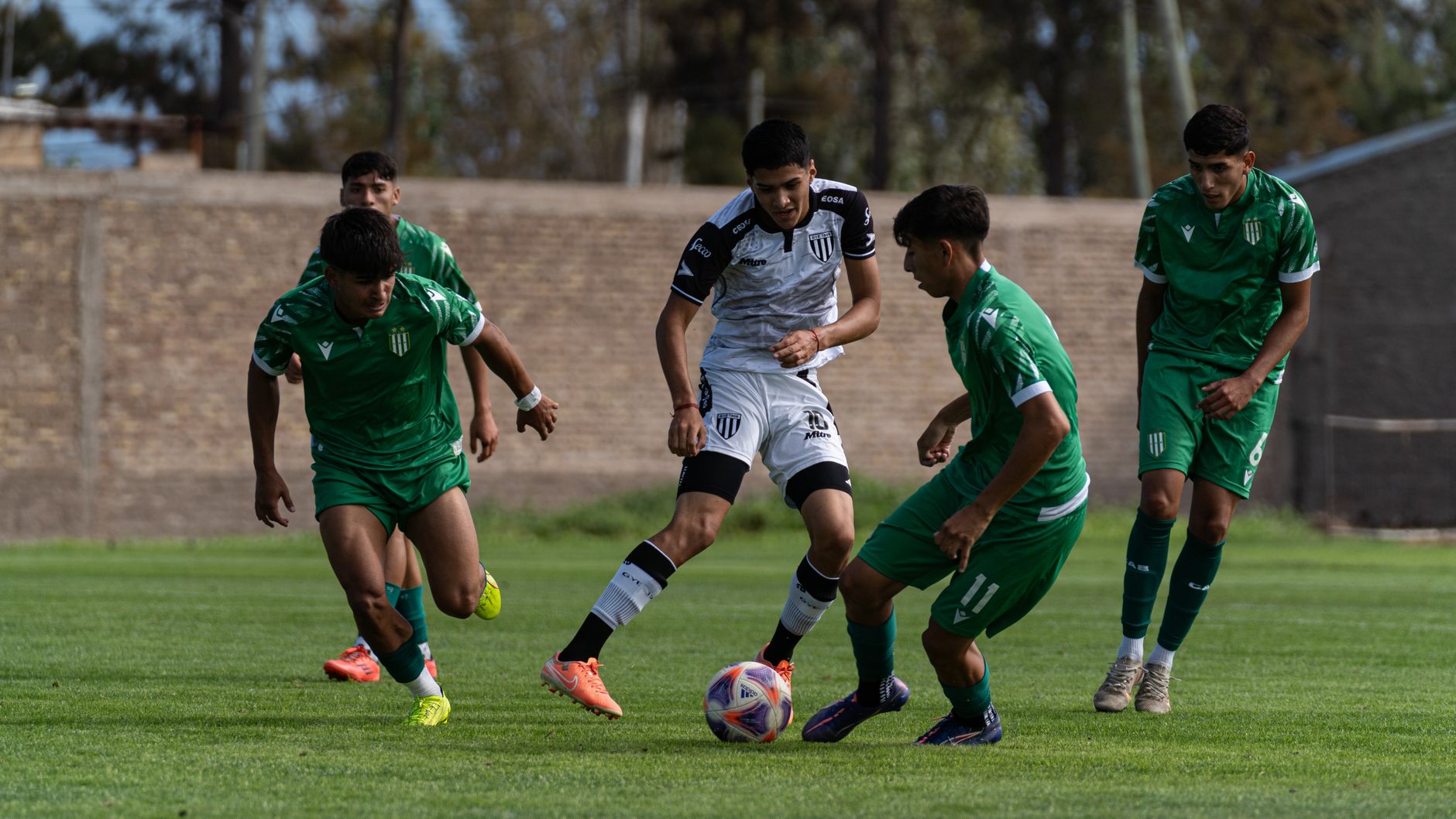
Photo by Franco Monsalvo on Pexels
Want a sharper interpretation of what the five-goal margin means?
Would I Use It Again?
I would use the Portugal national football team vs Uzbekistan national football team standings as a starting point, not as a complete prediction model. The table establishes Portugal’s advantage: four points, one win, one draw, and a major positive result against Uzbekistan. It does not automatically tell us how Portugal will perform against a team capable of defending transitions better, nor does it prove Uzbekistan has no route back into contention.
For match analysis, I would weigh the data in this order:
- Confirm the official points total and matches played.
- Check goal difference and goals scored.
- Review the remaining fixtures and opponent strength.
- Study whether goals came from repeatable attacking patterns or isolated errors.
- Reassess lineups, injuries, suspensions, and tactical changes.
That fourth step is where many previews fail. Portugal’s first three goals came through a combination of early finishing, movement, and pressure, but the own goal should not be treated as a repeatable attacking pattern. Leão’s late strike matters for confidence and match control, yet it should not inflate expectations into a guaranteed high-scoring follow-up. Conversely, Uzbekistan’s zero points are serious, but the more actionable question is whether the coaching staff can protect the first twenty minutes.
My recommendation is straightforward: use Portugal’s four-point position and five-goal victory to rate the team as the stronger side, but keep separate ledgers for standings evidence and future-match projection. That distinction has saved me from more losing calls than I care to remember. The standings tell us what happened; they do not, by themselves, tell us what happens next.
For continued 2026 tournament monitoring, review Stadium View’s [Internal Link: live World Cup standings tracker] and compare each update against official FIFA records.
The final verdict is clear enough: Portugal dominated the decisive meeting, while Uzbekistan faces a mathematical and tactical uphill climb. Read the table carefully, then verify every new result before drawing a conclusion.
Frequently Asked Questions
Q: What are the Portugal national football team vs Uzbekistan national football team standings after the match?
A: Portugal has four points from two matches, while Uzbekistan has zero points from two matches. Portugal’s record is one win, one draw, and zero defeats, whereas Uzbekistan has lost both games. Portugal’s 5-0 victory also created a substantial goal-difference advantage, although the exact group ranking must be checked against the other teams and official tie-break rules.
Q: What was the final score between Portugal and Uzbekistan in 2026?
A: Portugal defeated Uzbekistan 5-0 in the FIFA World Cup match on June 23, 2026. Cristiano Ronaldo scored twice, Nuno Mendes scored once, Rafael Leão scored late, and Uzbekistan’s Abduvohid Nematov was recorded with an own goal. The scoring sequence was Portugal 1-0 in the sixth minute, 2-0 in the seventeenth, 3-0 in the thirty-ninth, 4-0 in the sixtieth, and 5-0 in the eighty-seventh.
Q: How did Portugal reach four points in the standings?
A: Portugal reached four points through one win and one draw across two matches. Under the standard football scoring system, a win is worth three points and a draw is worth one point, producing a total of four. The 5-0 victory over Uzbekistan supplied three of those points, while the earlier draw supplied the remaining point.
Q: What is the difference between points and goal difference in these standings?
A: Points determine the primary position in a group, while goal difference measures goals scored minus goals conceded. Portugal’s four points are more important than its five-goal winning margin, but goal difference can decide the order when teams finish level on points. A 5-0 win produces a much stronger goal-difference effect than a 1-0 win, even though both victories award three points.
Q: Can Uzbekistan still qualify after losing 5-0 to Portugal?
A: Uzbekistan may still have a mathematical route if its group format and remaining fixtures allow it to collect enough points. However, zero points after two matches means Uzbekistan must improve both results and goal difference, not merely produce one narrow win. Its next priority should be avoiding another early concession, because the Portugal match showed how quickly a deficit can force an unstable attacking approach.
Q: Which formation did Portugal use against Uzbekistan?
A: Portugal used a 4-2-3-1 formation, while Uzbekistan used a 3-4-2-1. Portugal’s structure featured Ronaldo as the central striker, supported by João Félix, Bruno Fernandes, and Pedro Neto, with Vitinha and João Neves in midfield. Uzbekistan’s three-man defense relied on wing-backs for width, but Portugal’s early pressure exposed the space and timing problems that can arise in that system.
Q: Where can I track updated Portugal and Uzbekistan standings?
A: Use official FIFA competition information alongside reputable match providers such as ESPN and tournament-focused coverage from Stadium View. Check the date, matches played, points, goal difference, and remaining fixtures every time the table changes. Avoid relying on a screenshot or social-media summary because postponed matches, corrections, and tie-break calculations can alter the apparent ranking.
Level up your game with more elite strategies.
Stadium View · Protocol Archive · Elite Access