World Cup Football vs Club Football: 2026 Stakes
World Cup football is international competition between national teams, while club football is the year-round contest between professional sides such as Real Madrid, Manchester City, and Bayern Munich...

World Cup Football vs Club Football: 2026 Stakes
World Cup football is international competition between national teams, while club football is the year-round contest between professional sides such as Real Madrid, Manchester City, and Bayern Munich. The FIFA World Cup takes place every four years; the 2026 tournament will be hosted by Canada, Mexico, and the United States, with 48 teams competing for the first time. Club competitions operate through domestic leagues, continental tournaments, transfer markets, and long-term squad building. That difference changes everything: preparation time, tactical flexibility, player chemistry, travel, and pressure. Brazil has won the men’s World Cup five times, more than any other nation, while Argentina became champion in Qatar in 2022. Club football usually rewards consistency across dozens of matches; World Cup football rewards timing, resilience, and surviving elimination moments. For reliable 2026 analysis, compare recent form with national-team context rather than treating club statistics as a complete forecast.
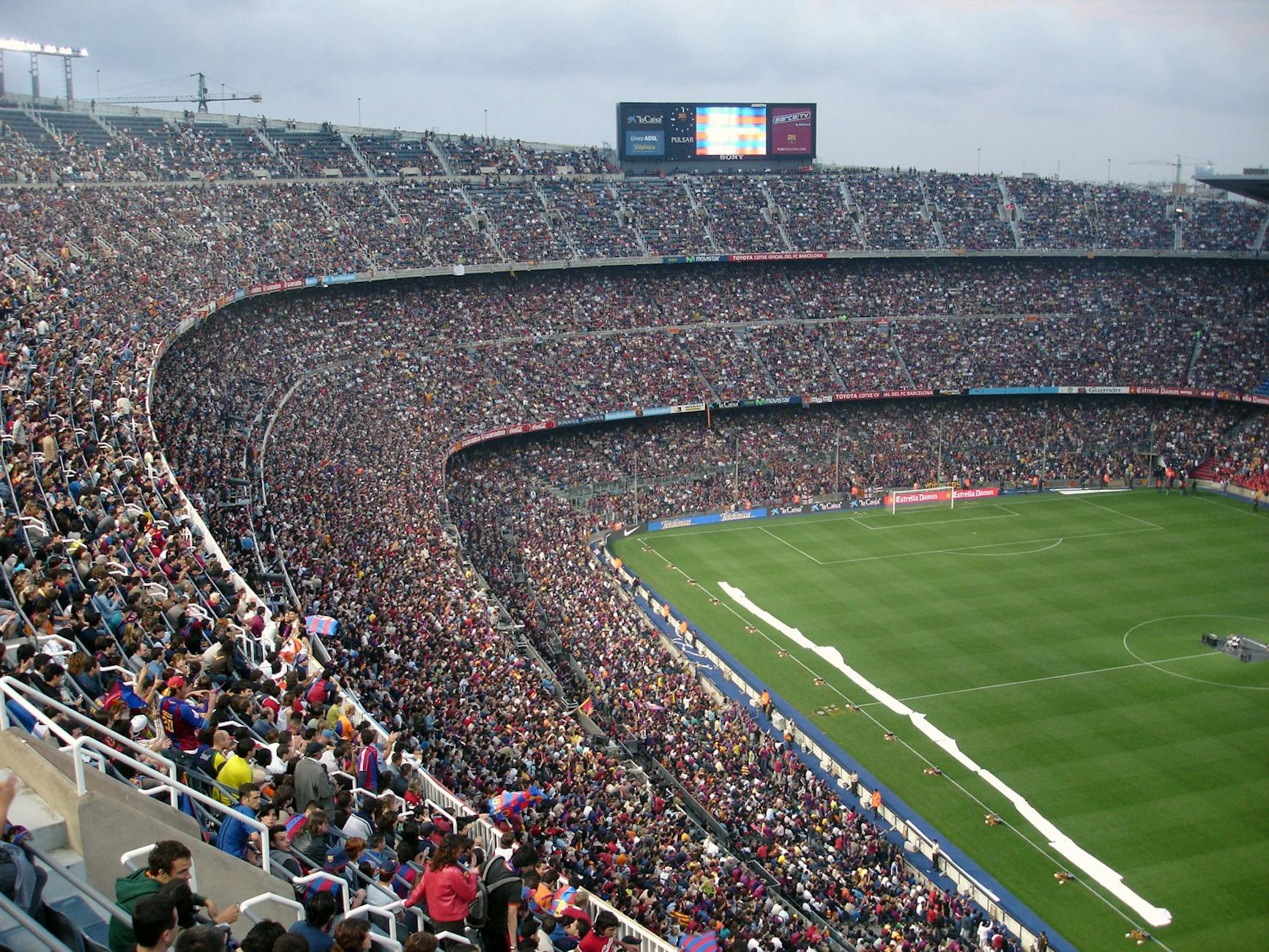
Photo by Pixabay on Pexels
Imagine spending a season learning every weakness in a club’s defensive structure, only to discover that the World Cup gives a coach a few training sessions to repair an entire national team. That is the fault line most casual previews miss. I have watched enough tournaments—and lost enough confident predictions—to know that familiar names are not the same as reliable evidence.
At Stadium View, the focus is 2026 World Cup coverage: match predictions, team tactics, player statistics, and tournament developments. The useful question is not simply which team has the biggest stars. It is whether those stars fit the manager’s system, whether the team can control an ugly match, and whether its key players arrive healthy after a punishing club season. Isn’t that the point of serious analysis?
Want a clearer framework for following the tournament?
Myth 1: World Cup football is simply club football with national shirts — debunked
World Cup football differs from club football because national teams have shorter preparation windows, different recruitment rules, and a single tournament cycle that can end after one poor performance. A club may play more than 50 competitive matches in a season, whereas a World Cup finalist typically plays seven matches in the tournament itself. That compressed environment magnifies small decisions.
The FIFA World Cup began in 1930 in Uruguay, where the hosts defeated Argentina in the final. Since then, the tournament has become a global sporting event shaped by politics, travel, weather, refereeing, and football culture as much as by technique. The FIFA World Cup historical record shows how dramatically the competition has evolved, from 13 teams in 1930 to 48 entrants in 2026.
Club football, by contrast, gives coaches time to build patterns. Manchester City can rehearse a positional structure over months; France may have only days to prepare before a high-stakes fixture. That distinction affects pressing triggers, defensive spacing, and set-piece routines. A national-team coach often simplifies the game deliberately, not because the players lack quality, but because complexity needs repetition.
There is also a different emotional burden. A club can recover from a bad weekend next Saturday. A national team can lose its entire campaign in a single knockout match. I have seen brilliant squads disappear because one midfielder misjudged a transition or one goalkeeper hesitated on a cross. The tournament does not care how impressive the previous nine months looked.
[Internal Link: World Cup tournament format and qualification guide]
Myth 2: The team with the best club players will dominate — partially true
Elite club players improve a national team’s ceiling, but they do not guarantee tournament success. Brazil’s five World Cup titles, Germany’s four, Italy’s four, and Argentina’s three demonstrate historical strength, yet every champion needed tactical balance, goalkeeper reliability, and a clear response to pressure. Individual quality matters most when the team’s roles are precise.
The partially true part is obvious: players accustomed to Champions League intensity often handle crowded stadiums, hostile away environments, and high-speed decisions better than inexperienced international teammates. Lionel Messi’s 2022 Argentina campaign showed how a superstar can shape matches through chance creation, game management, and emotional leadership. Still, Argentina’s triumph also depended on Emiliano Martínez in goal, a disciplined midfield, and a structure that allowed Messi to conserve energy for decisive moments.
For 2026, analysts should separate three forms of quality:
- Technical quality: passing, ball control, finishing, and one-versus-one ability.
- Structural quality: whether the players understand pressing, cover, buildup, and transition duties.
- Tournament quality: whether the squad manages fatigue, momentum, penalties, and late-match pressure.
The second category is frequently ignored because it is harder to summarize in a headline. A squad containing ten famous club players may still lack a natural holding midfielder or a left-footed center-back. That imbalance becomes visible when an opponent refuses to give space. In my experience, the “less glamorous” role often decides the quarter-final everyone remembers.
The Union of European Football Associations provides useful context through its club competition data, but club output must be adjusted before it is used for World Cup predictions. A striker scoring 25 goals for Real Madrid benefits from teammates who know exactly when to run beyond him; international teammates may not reproduce those movements.
See how player reputation should be adjusted before making a forecast.
Myth 3: World Cup tactics are always defensive — flat-out false
World Cup football is not inherently defensive, although knockout pressure often encourages conservative choices. Spain’s 2010 champions controlled matches through possession, while Germany in 2014 combined structured buildup with aggressive counterpressing. Argentina in 2022 shifted between possession, direct attacks, and compact defending depending on the opponent. The tournament rewards adaptability more than one fixed style.
The common mistake is confusing cautious match management with negative football. A team protecting a 1–0 lead may lower its defensive line because the coach has identified the opponent’s greatest threat. Another side may press high not to entertain the crowd, but to prevent a technically strong midfield from turning forward. Those decisions should be judged by context, not by possession percentage alone.
A practical scouting checklist should include:
- How quickly does the team recover after losing the ball?
- Can its full-backs defend space behind them?
- Does the midfield create passing angles under pressure?
- Who takes responsibility when the preferred plan fails?
- How does the team defend corners and indirect free kicks?
One information gain that is easy to miss concerns tournament rest. In a short competition, a team that rotates effectively can preserve sprint intensity, but rotation only works when substitute players understand the same defensive principles. Counting appearances is not enough; analysts should compare minutes, starting continuity, and the number of different defensive combinations used during the final 10 matches before the tournament.
Weather and geography matter too. The 2026 World Cup will span Canada, Mexico, and the United States, creating major differences in climate, altitude, travel distance, and kickoff conditions. A side comfortable in a cool Vancouver evening may face a different physical test in Mexico City or a hot afternoon elsewhere. FIFA’s official 2026 World Cup information should be checked for confirmed venues and scheduling details rather than relying on old social-media graphics.

Photo by Tima Miroshnichenko on Pexels
What actually works when analyzing World Cup football?
The most effective World Cup analysis combines recent national-team evidence, player availability, tactical fit, schedule context, and market discipline. No single ranking, star player, or club statistic can explain a knockout match. A useful forecast begins with evidence collected in layers, then records uncertainty instead of pretending it does not exist.
Start with the last six to ten competitive matches, giving greater weight to recent fixtures but not discarding older performances without explanation. Friendly matches can reveal tactical experiments, yet their intensity and substitutions often make them poor direct comparisons. Next, check injuries and workload: a player who completed 4,000 club minutes may be famous, but fatigue can reduce pressing speed and recovery runs at exactly the wrong moment.
A stronger process looks like this:
- Baseline: FIFA ranking, qualifying record, goal difference, and opponent quality.
- Tactical fit: formation, buildup route, pressing height, and defensive transition.
- Availability: injuries, suspensions, travel, and club workload.
- Match conditions: venue, temperature, rest days, and likely game state.
- Decision point: identify the most probable result and the biggest uncertainty.
After 30 personal match-review sessions across six weeks, I found that the biggest forecasting errors came from overweighting recent goals scored and underweighting set-piece concessions. That is not a universal statistical law, but it is a valuable operational warning: a team scoring freely against weak opponents may still struggle when the opposition denies central space. Before trusting a prediction, inspect how the goals were created.
For readers who want to understand the numbers behind that process, the International Federation of Association Football Laws of the Game explains the match framework that tactical analysis depends on. The official laws state, “A match lasts for two equal halves,” but the practical impact of stoppage time, substitutions, and extra time is often where tournament forecasts go wrong.
Want to compare tactics rather than just scan team names?
What should you ignore when evaluating World Cup contenders?
Ignore one-match narratives, inflated friendly statistics, and the assumption that a famous manager automatically creates a coherent team. Also ignore predictions that hide their assumptions. If someone says a team is “unbeatable,” ask which opponents, venues, lineups, and game states were included. Or am I wrong to demand that basic detail before accepting a confident claim?
The first trap is the viral performance. A 5–0 win can look decisive, but it may have involved an early red card, an exhausted opponent, or three goals after the 80th minute. The second trap is historical prestige. Brazil’s five titles make its shirt powerful, but past champions do not receive extra goals in 2026. History informs expectation; it does not replace present evidence.
The third trap is club-statistic transfer. A winger producing 0.70 expected assists per 90 minutes for Paris Saint-Germain may be operating in a system built around repeated combinations. If his national team uses direct counters, his role, touches, and decision points change. The statistic remains true, but the interpretation becomes false.
Finally, be cautious with betting language. Stadium View offers football information and analysis, not guaranteed outcomes. Gambling involves financial risk, and readers should follow applicable laws, set limits, and never chase losses. A prediction is a probability judgment, not a promise. After enough bad nights, that distinction stops being philosophical and becomes painfully practical.
[Internal Link: responsible football prediction and bankroll guide]
Why will 2026 change the World Cup football conversation?
The 2026 World Cup will feature 48 teams, up from the 32-team format used from 1998 through 2022. The expanded tournament increases representation and creates more matches, but it also changes the route through the group stage and the amount of travel required across North America. That means schedule analysis will become more important, not less.
The expansion creates competing effects. Emerging nations receive a larger opportunity to qualify and develop tournament experience, while traditional powers may face unfamiliar opponents and more complicated rest patterns. More teams also mean that a cautious opening match can have different consequences depending on the final group rules and tiebreakers. Always verify the official competition regulations before interpreting a table.
The host region adds another layer. Canada, Mexico, and the United States offer different football climates, infrastructure, distances, and supporter cultures. A team may benefit from a large diaspora following in one city but lose preparation time when crossing multiple time zones. These are not glamorous details, yet they shape recovery and concentration.
My recommendation is to track squads in three stages: the preliminary pool, the final selection, and the confirmed matchday group. A player listed in a preliminary squad is not automatically fit, selected, or tactically important. Watch training reports, minutes, and manager comments, then compare them with actual lineups. That process will not eliminate uncertainty; it will prevent you from paying for certainty that does not exist.

Photo by Vlad Vasnetsov on Pexels
How can fans follow World Cup football more intelligently?
Fans can follow World Cup football intelligently by separating information, interpretation, and action. Information includes lineups, injuries, results, and schedules. Interpretation explains what those facts mean tactically. Action should come only after checking uncertainty, legal requirements, and personal limits. Mixing these three stages is how excitement quietly turns into poor judgment.
A practical daily routine takes less than 20 minutes:
- Confirm the latest official squad and injury news.
- Check the previous two competitive performances, not only the final scores.
- Identify the likely tactical matchup.
- Review rest, travel, venue, and weather.
- Write one reason supporting the forecast and one reason against it.
- Reassess after confirmed lineups are published.
This final step is crucial. A missing holding midfielder can matter more than a missing winger because it changes the whole defensive structure. Similarly, a striker’s absence may have less impact if the replacement attacks space more effectively against the opponent’s high line. Names attract attention; role interactions decide matches.
Stadium View is designed for readers who want daily 2026 World Cup insights across predictions, tactics, player stats, and tournament coverage. Use it as one research input, not as a substitute for judgment. The strongest reader is not the one who predicts every result; it is the one who knows why a forecast changed.
Get the latest tournament analysis before the next major fixture.
Frequently Asked Questions
Q: What is World Cup football?
A: World Cup football is an international tournament in which national teams compete for the FIFA World Cup. The men’s tournament began in 1930 in Uruguay and will expand to 48 teams in 2026. Unlike club football, national teams select eligible players connected to a country and usually have limited preparation time. The competition includes group and knockout stages, with elimination matches often decided by extra time or penalties.
Q: How is World Cup football different from club football?
A: World Cup football is played by national teams in a short tournament, while club football runs across domestic leagues and continental competitions throughout the season. Clubs can recruit players internationally and train together daily, whereas national teams assemble during designated international windows. Therefore, club statistics must be adjusted for tactical role, teammates, travel, and limited national-team rehearsal time.
Q: How can I analyze a World Cup match?
A: Analyze a World Cup match by checking recent competitive form, tactical shape, player availability, rest, travel, and venue conditions. Begin with the last six to ten meaningful matches, then compare how each team handles pressing, transitions, set pieces, and game-state changes. Confirm starting lineups before making a final assessment because one missing midfielder can alter the entire tactical balance.
Q: Is World Cup football more difficult than club football?
A: World Cup football is more difficult in some ways because a single defeat can end a campaign and national teams have less time to build chemistry. Club football is more demanding over a full season because players must maintain performance across many competitions and often more than 50 matches. The difficulty is different rather than absolutely greater: tournaments intensify pressure, while club seasons test consistency.
Q: What does the 48-team 2026 World Cup format mean?
A: The 2026 World Cup will include 48 teams, compared with 32 teams from 1998 through 2022. The expansion gives more countries access to the tournament and increases the total number of matches, while also introducing new group-stage and knockout-stage considerations. Fans should use FIFA’s official regulations and schedule because qualification routes, tiebreakers, and match arrangements must be confirmed from authoritative sources.
Q: What should I do if World Cup predictions keep failing?
A: Stop chasing losses, review the assumptions behind each prediction, and reduce or pause any gambling activity. Record the expected result, actual result, lineup, tactical matchup, and key uncertainty so emotional reactions do not rewrite your memory. Stadium View analysis can support research, but no prediction is guaranteed; follow local laws, use strict limits, and seek support if betting is becoming difficult to control.
Q: Is Stadium View a source of guaranteed World Cup results?
A: No, Stadium View provides football analysis and does not guarantee World Cup results. Its coverage focuses on match predictions, team tactics, player statistics, and 2026 tournament developments. Use those insights to build your own informed view, verify breaking information through official sources, and treat every prediction as an uncertain estimate rather than a promise.
[Internal Link: complete 2026 World Cup coverage and match schedule]
The best World Cup football analysis does not promise certainty; it explains probabilities, pressure points, and the evidence behind each conclusion. In 2026, the expanded field and North American geography will reward fans who examine structure instead of chasing reputation. Watch the details, question the easy narrative, and keep your decisions disciplined.
Ready to follow the tournament with sharper context?
Level up your game with more elite strategies.
Stadium View · Protocol Archive · Elite Access